

Walkin' Pets — Wheelchairs, Splints & Support for Dogs
Walkin' Pets — Mobility Support for Dogs Who Need a Steady Hand
When standing up is the hardest part of the day, the right cart and harness turn wobbly minutes into real walks again.
Featured Products
A closer look at what Walkin' Pets makes — the pieces our customers reach for first.
Caregiving Starts With Getting Around
When a dog suddenly can't do the things they used to — jump on the couch, pad across the kitchen floor, follow you out to the garden — the whole household feels it. At Golden Wags, we sit with owners in that moment often, and the question is usually the same: how do we give them their independence back?
Walkin' Pets builds mobility equipment with that question in mind. Their line is designed for dogs facing paralysis, degenerative mobility loss, or the slow weeks of post-surgical rehab — the dogs whose caregivers want a real plan, not a guess.
What Walkin' Pets Brings to Your Dog's Day
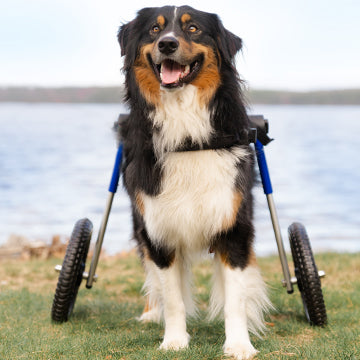
Walkin' Pets focuses on a small set of tools that do one job well: keep a dog upright, mobile, and comfortable. The Walkin' Wheels Rear Wheelchair supports dogs whose hind legs need a break, while the Walkin' Splint stabilizes a single limb that's healing or weakening.
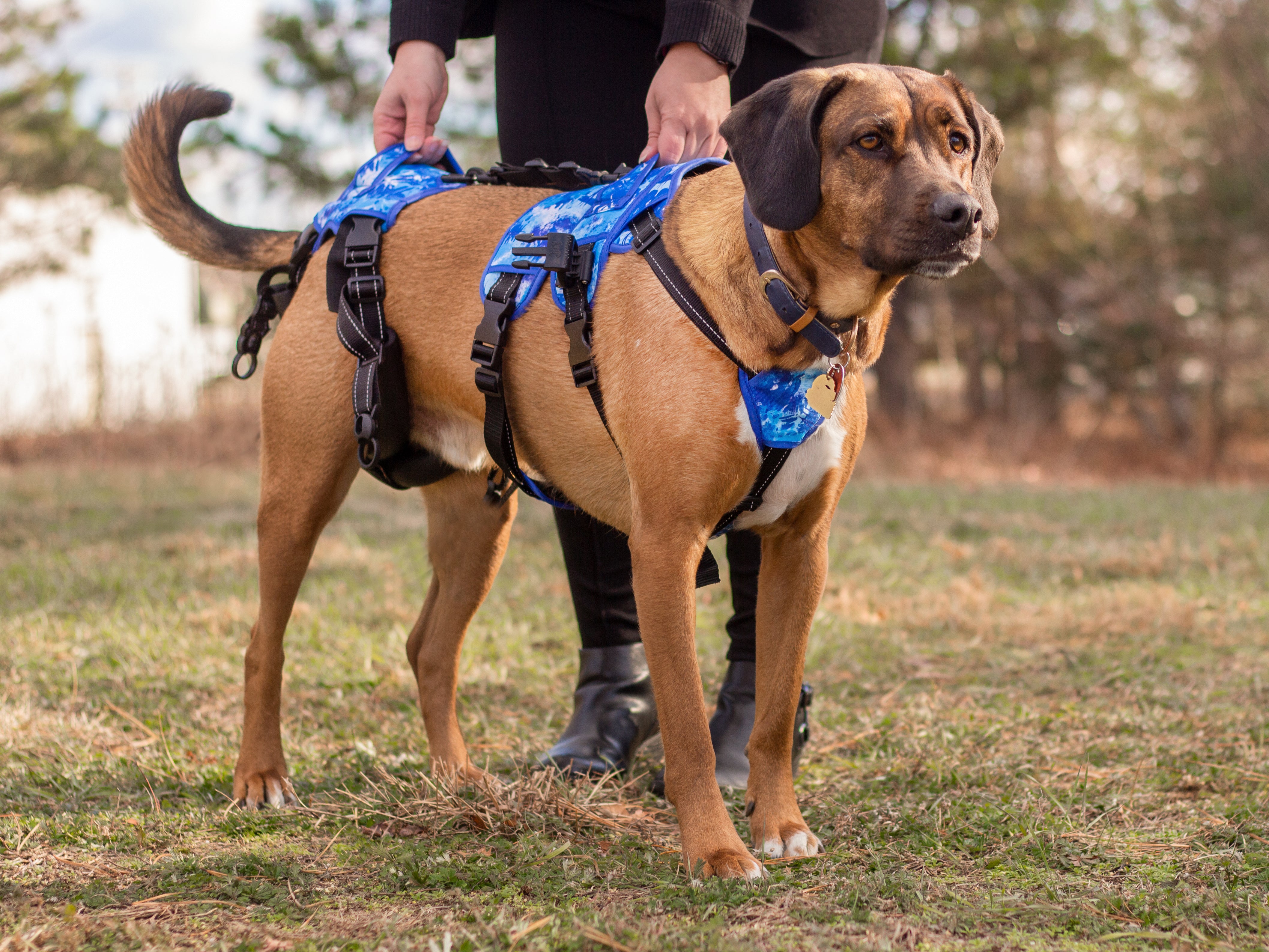
For many families, the unsung hero is the rear-lift harness — a simple strap system that lets you help your dog stand, step outside, or finish a short walk without lifting their full weight. Together, these pieces cover the most common mobility chapters: recovery, slow decline, and the everyday moments in between.
Where These Tools Fit in Real Life
Mobility loss rarely arrives all at once. Some dogs come home from surgery needing a few weeks of support. Others have a degenerative diagnosis that changes week by week. Walkin' Pets equipment is built to flex with both timelines.
Typical situations where caregivers reach for this gear:
- Post-surgical recovery when a dog needs to stay partially off a healing leg.
- IVDD, degenerative myelopathy, or other progressive conditions.
- Sudden weakness or paralysis in one or both rear legs.
- Senior dogs whose back end tires before the rest of them does.
- Rehabbing an injured paw, hock, or knee.
Because the pieces are adjustable, they often grow with the dog and shift as their needs change.
A Line Built With Veterinary Input
Walkin' Pets has spent years working alongside veterinarians and rehab specialists, and that relationship shows up in how their equipment is shaped. Frames are adjustable rather than one-size-fits-all. Padding sits where pressure sores tend to start. Splints are sized to specific joints rather than vaguely "small" or "large."
That said, every dog is different — especially one healing from surgery or living with a progressive condition. We always recommend checking fit and timing with your veterinarian before introducing a new piece of mobility gear.
Browse the Walkin' Pets Collection
If your dog is facing a mobility chapter — whether it's a few weeks or a long road — the Walkin' Pets collection at Golden Wags is a thoughtful place to start.
Frequently Asked Questions
What conditions is Walkin' Pets equipment designed for?
The line is built around dogs with paralysis, degenerative mobility loss like IVDD or degenerative myelopathy, weakness in the rear limbs, and post-surgical rehab needs. Many senior dogs also use the gear when their back end tires faster than the rest of them.
Can a dog still use their back legs in a Walkin' Wheels cart?
Yes. The Walkin' Wheels Rear Wheelchair is designed so a dog can kick, walk, or rest with their rear legs as they're able. Many dogs use their legs for short trips and let the wheels carry them on longer walks.
How do I know which splint size my dog needs?
Sizing depends on the specific joint and the measurement Walkin' Pets recommends for that splint. Because fit matters a great deal — especially on a healing limb — we suggest comparing measurements carefully and confirming with your vet before ordering.
Will my dog need time to adjust to a wheelchair?
Most dogs need a short adjustment period. Caregivers usually start with short, positive sessions indoors and gradually build up to longer walks outside. Treats, patience, and a calm first route help a lot.
Should I talk to my vet before ordering?
Yes, especially if your dog is mid-recovery, has a progressive diagnosis, or has any skin or pressure concerns. A vet or rehab specialist can help confirm the right piece of equipment and the right time to introduce it.
Explore More Brands
Other trusted names we carry for senior, blind, and mobility-challenged dogs.